Blog Archives
Latest HIV blood results (August 2013)
Last week I popped into the HIV clinic to have my bloods taken, nine vials of the damned stuff – bleeding vampyrs! Today I popped back to get my results.
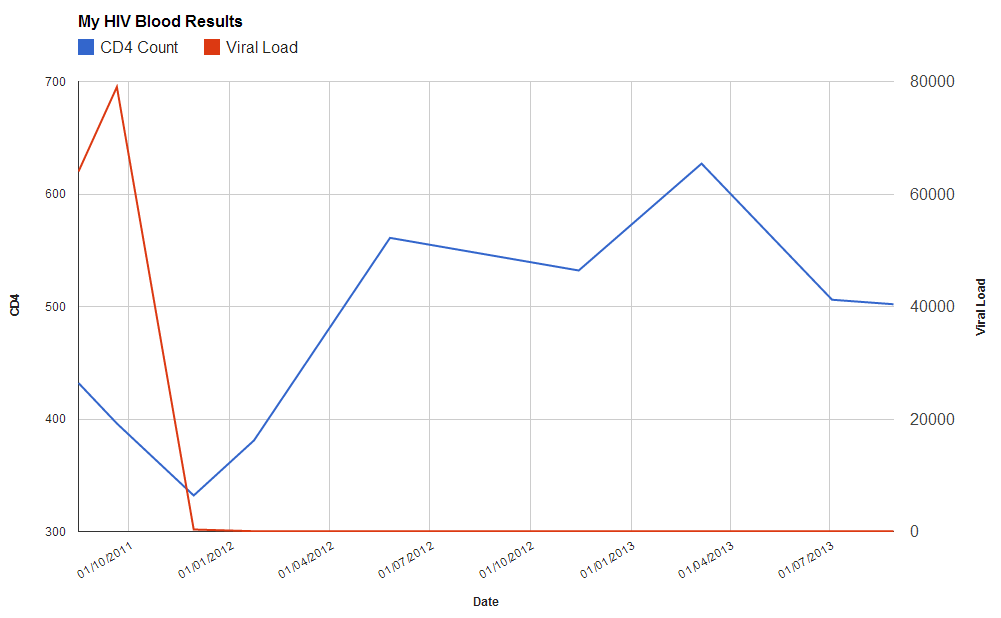
As you can see my CD4 has remained steady-ish, 502 at latest count and my Viral Load (VL) is staying at ‘undetectable’ with <39 copies per ml of blood. All of this is good news, it means my medication is working properly (always a worry when you change meds) and my immune system is holding up to the stress.
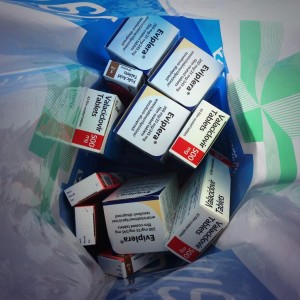 The only thing they did mention is that my blood cells are slightly larger than normal, at 100.7% of their normal size (which doesn’t seem much) so they’ve prescribed me some Folic Acid supplements to try and bring that back down to 100%.
After that I popped to the pharmacy to fill my prescription for four months of meds. Most people get a small paper bag when they collect their prescription, when they see me coming they get out a huge plastic bag… I’m actually surprised that I don’t rattle!
Have a great day,
Tom
UKPositiveLad
Talking HIV, testing & stigma on ITV Daybreak & BBC Radio 5 Live
Well the last twenty-four hours have been interesting. Yesterday afternoon I got an email from a producer at ITV’s Daybreak breakfast show asking me to give them a call, it turned out they wanted me on the sofa the next morning to give my opinion on the HIV home testing kits that are due to be legalised come April 2014.
I ended up being booked onto a train only a couple of hours later, a car met me at Euston and took me to my hotel where a camera crew turned up to shoot promos, they left about midnight and I set my alarm for 05:00am. My alarm went off, I got up made myself presentable and a car took me to the studio. After several coffee’s I got plonked on the Daybreak sofa with Dr Hilary Jones and we were interviewed by Matt Barbet and Kate Garraway. I think it went pretty well – but you can check out the interview here: https://www.itv.com/itvplayer/daybreak/15-08-2013 (I’m on at 07:23am).
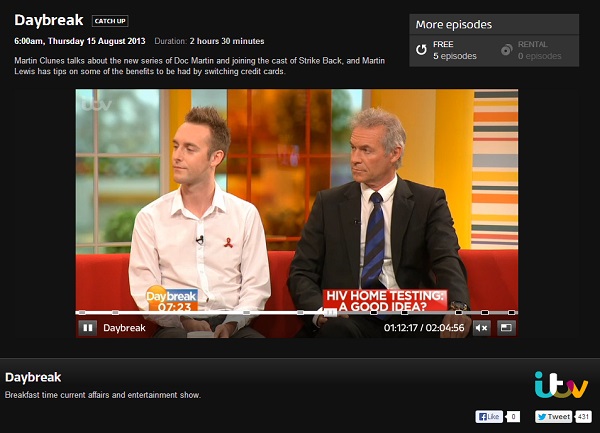
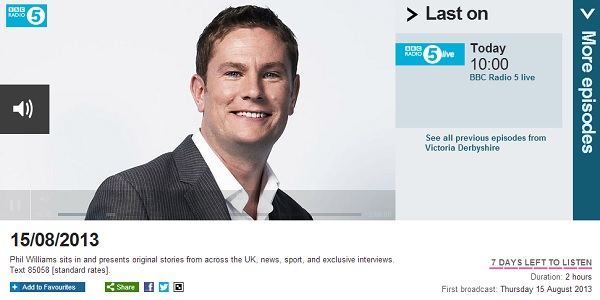
The car picked me up again and dropped me off at London Euston. Just as I was about to board my train I got a call from SavingLivesUK who wanted me to talk on their behalf on BBC Radio 5 Live’s morning show. So they sent another car for me, whisked me off to BBC Broadcasting House and I was interviewed alongside Sir Nick Partridge of the Terrence Higgins Trust by Phil Williams. It was a much more in-depth piece on HIV, focusing on stigma and the lifting of the ban on HIV+ healthcare professionals. You can catch the interview on BBC iPlayer here: http://www.bbc.co.uk/programmes/b0388b33
After that I headed back to Euston and got a train home to Birmingham. Now I’m sat in my office at my day job struggling to keep my eyes open. I’m going to sleep well tonight!
Let me know what you think of the interviews in the comments section below!
Love,
Tom
UKPositiveLad
Two years on, still strong. Thank you for your support.
 Sunday was a milestone for me, it was the two year anniversary of my HIV diagnosis.
Two years ago, on Thursday 4th August 2011, I was sat in Whittall Street Clinic Birmingham being told something that’d change my life forever – that I was HIV+.
The past two years have flown by, I’ve seen my CD4 as low as 364 and as high as 627, whilst my Viral Load has been on a constant drop from 79,000 to the ‘undetectable’ level it is now. I’ve gone from blogging anonymously about my fears of living with HIV to blogging publicly. I’ve written for a dozen magazines, as well as spoken on television and radio – heck I even launched the 2013 ICC Champions Trophy Cricket Final in front of 1.5bn people last month. When I started my blog over on WordPress just after my diagnosis I was too afraid to say who I was, I got a couple of hits a day and didn’t really know why I was doing it. Now in 2013 I’m out there, I’m getting 10,000 hits and 50-60 odd emails asking for support each day.
But whilst that’s exciting and everything, the biggest thing for me is how much I’ve come to terms with what is essentially a life long condition in such a short period of time and how I’ve been able to make use of my experience over the last couple of years to help other people who are coming to terms with their own diagnoses. Over the last year or so I’ve been volunteering at one of the local HIV clinics – offering a chaperon service to people new to the clinic, it’s been one of the most rewarding things I’ve ever done. I’ve even personally raised over £8,000 for various HIV charities – which wouldn’t be possible without your support.
At the end of this month, August, I’ll be taking part in a training course with THT to become an Online Peer Support Volunteer over at MyHIV.org.uk. It’s something I’ve wanted to do for a while but due to funding training course places are scarce – so I’m grabbing this opportunity with both hands!
To those who are just coming to terms with their own HIV diagnosis: Stand strong. Things may feel bad now, but just hold on in there. HIV is a bastard it’s true, but it doesn’t define who you are. You are and still can be amazing.
To those who have supported me along the way: Thank you, your constant love and support – it has been a constant source of strength for me, even in my darkest hours.
Thanks and all my love,
Tom
UKPositiveLad
It Starts With Me, what about you?

You may remember a week or so back I posted about a new HIV awareness campaign in England called ‘It Starts With Me’ – designed to educate people about HIV, how it’s spread, how it’s prevented and what they can do to fight HIV.
Well the campaign is really in full swing now, with events and awareness materials rolling out across England.
Yesterday I returned from a trip to Berlin with my friend Anthony to find a ‘It Starts With Me’ t-shirt waiting on my door step. So I popped it on and took a few snaps, you’ll probably see me at a few events up and down the country – including pride events wearing it, talking to people about their attitudes towards sexual health, testing and HIV.
Some quick HIV related facts from the It Starts With Me website:
- 1 in 4: The number of people with HIV in the UK aren’t aware that they have it
- 10 years: how much shorter your life could be if you delay testing
- 8 in 10: gay men get HIV from someone who doesn’t know they have it
- 25-29: the age group in which the most gay men test HIV positive
- 96%: Treatment for HIV can make you upto 96% less infectious to others
Please make sure to head over to the It Starts With Me website to find out more about HIV, and how YOU can stop it in its tracks.
Peace out!
Tom
UKPositiveLad
Latest Blood Results – March 2013
G’day Lads and Lasses,
Yesterday I went to my local HIV Clinic at the lovely Queen Elizabeth Hospital Birmingham. I popped in to get the results from my routine blood-work I had done last week.
My consultant gave me my latest figures: My CD4 is up from 534 to 627 (yay) and my Viral Load remains undetectable (double yay).

Now for those of you who aren’t au fait with the terminology here are some a couple of quick explanations from aidsmap.com:
- T-cells (or T-lymphocytes) are white blood cells that play important roles in the immune system. There are two main types of T-cells. One type has molecules called CD4 on its surface; these ‘helper’ cells organise the immune system’s response to bacteria, fungi and viruses. The other T-cells, which have a molecule called CD8, destroy cells that are infected and produce antiviral substances.HIV is able to attach itself to the CD4 molecule, allowing the virus to enter and infect these cells. Even while a person with HIV feels well and has no symptoms, billions of CD4 cells are infected by HIV and are destroyed each day, and billions more CD4 cells are produced to replace them. Doctors use a test that ‘counts’ the number of CD4 cells in a cubic millimetre of blood. A normal CD4 count in a healthy, HIV-negative adult can vary but is usually between 600 and 1200 CD4 cells/mm3 (though it may be lower in some people).
- Viral load is the term used to describe the amount of HIV in your blood. The more HIV there is in your blood (and therefore the higher your viral load), then the faster your CD4 cell count will fall, and the greater your risk of becoming ill because of HIV. Viral load tests measure the amount of HIV’s genetic material in a blood sample. The results of a viral load test are described as the number of copies of HIV RNA in a millilitre of blood. But your doctor will normally just talk about your viral load as a number. For example, a viral load of 10,000 would be considered low; 100,000 would be considered high.
- All viral load tests have a cut-off point below which they cannot reliably detect HIV. This is called the limit of detection. Tests used most commonly in the UK have a lower limit of detection of either 40 or 50 copies/ml, but there are some very sensitive tests that can measure below 20 copies/ml. If your viral load is below 50, it is usually said to be undetectable. The aim of HIV treatment is to reach an undetectable viral load.But just because the level of HIV is too low to be measured doesn’t mean that HIV has disappeared completely from your body. It might still be present in the blood, but in amounts too low to be measured. Viral load tests only measure levels of HIV in the blood, which may be different to the viral load in other parts of your body, for example in your genital fluids, gut or lymph nodes.
The dietician is slightly concerned about my weight however, I used to weigh between 62 and 64kg (that’s 9st 10lb – 10st in old money) and now I weigh 56Kg (8st 11lb). So they’ve put me on a new diet – where essentially they want me to be eating all day long. Lots of things rich in sugar, fat, dairy and protein. Not sure how I’m going to afford that mind!
To combat the rising number of cold-sores I’ve been getting too my consultant has put me on a daily dose of Valaciclovir to combat those at the root cause, hopefully we can get that under control too. All in all a pretty productive trip to the hospital, all done for four months now!
Until tomorrow lovely people,
Tom
UKPositiveLad
March issue of ATTITUDE Magazine – OUT NOW
 Greetings to you all out there in cyber-space,
Just a quick note to let you know that the March 2013 issue of ATTITUDE Magazine is out now, and wow is it a tasty one! This month is is ATTITUDE’s famed ‘Naked Issue’ – featuring toned torsos and buttocks from the likes of Shayne Ward and Colin Gentry.
But fear not dear reader it’s not all style and no substance, this Naked Issue ATTITUDE have teamed up with NAT (National AIDS Trust) to talk about safer sex, condom use, HIV and the importance of getting tested – a must read.
Oh, and don’t forget my column – this month I talk about how I’m having ups and downs with my medication but how I remain thankful that it’s now, and not 30 years ago. Find out why…
Lots of love,
Sam
UKPositiveLad
Your HIV questions answered by DrEd.
Currently 100,000 people are estimated to be living with HIV in the UK, but an estimated 25% of those are undiagnosed.
That’s 25,000 people who have HIV and don’t know about it! As we come to the end of HIV Testing Week in the UK and approach World AIDS Day 2012 I put some of your questions about getting tested and HIV to Dr Sebastian Winckler from DrEd.
1. Why is it so important to get tested for HIV?
Early testing is vital both for you, and for the people you’re sleeping with.
If you’ve got HIV and you’re getting treatment you can expect to live 40 years longer than someone who isn’t receiving treatment.
If you’re taking antiretroviral medication, you become less infectious to other people. Being aware of your status means you can start putting certain measure in place (such as safe sex)
to prevent transmission, as well as looking after your own health.
2. What stops some people from getting tested?
There are a lots of reasons why people avoid HIV tests, but usually it’s down to:
- The stigma surrounding HIV and AIDs: Despite advancements in treatment, in some communities there is still stigma about being HIV+, so many people feel embarrassed about getting tested. Remember, there is no shame in being HIV+.
- The inconvenience of testing: If you work during the day, it can be hard work finding the time to go.
- Fear: Some people are simply scared off getting a result they don’t want to hear. Remember though, it’s better to get tested and treated rather than making yourself, or others, ill.
3. Where can I get tested?
HIV tests are available free and confidentially from:
- Sexual health (GUM) clinics
- HIV testing centres (Terrence Higgins Trust Fastest centres, for example)
- LGBT Centres
- GP’s and family doctors
- HIV tests are available to buy from:
- Private clinics
- Online doctors services
4. I haven’t had any symptoms, so I probably don’t have HIV, right?
Wrong. Most people will experience a short, flu-like illness about 2- 6 weeks after being infected. This is your immune system putting up an initial fight against the virus and can last for up to a month. But, this can be easily mistaken for the flu and 20% of people don’t experience any symptoms at all.
After this has gone away, you are unlikely to notice any other symptoms for a long period of time. So the only way of knowing for sure is getting yourself tested.
5. Can a test pick up any HIV infection, regardless of when I’ve caught it?
No. A certain amount of genetic material needs to build up in your system before it can be accurately detected by a test. The time taken for this to happen is called the ‘window period’ and this is different for every test.
- The standard antibody (Ab) test will pick up HIV if you caught it more than 3 months ago.
- The combined antibody/ antigen test (4th Generation test) will pick up HIV if you caught it more than 6 weeks ago.
- The HIV PCR test will pick up HIV if you caught it more than 7-10 days ago.
In most cases, you will be given either the standard antibody or combined test. If you test negative for these, it doesn’t necessarily mean that you are HIV negative, because you might have been infected within the last 3 months (or 6 weeks). You are therefore advised to take a second test 3 months later for the all clear.
If you want a faster result you can pay for a PCR test. But these are only offered at some clinics and may cost up to £250.
6. I think I’ve caught HIV within the last few days, what do I do?
If you’re worried that you’ve contracted HIV very recently, as in, within the past 72 hours (3 days) then you should go to your local GUM clinic or A&E department and request emergency PEP treatment.
7. I’m afraid to get tested because I don’t like needles
HIV tests don’t have to be done via needle or syringe, some clinics use ‘Fastest’ Rapid Testing which simply takes a prick on the end of your finger. Other clinics may take oral swabs instead, this method is considered less effective than a blood test however, so some clinics won’t offer it.
8. How long do I have to wait for my results?
That depends on the clinic you go to. Most will contact you with your result (or ask you to come back in for it) within 3-5 days. If you take a rapid test your result will be ready within the hour. Some clinics can take up to 2 weeks however, don’t be afraid to ask when you should expect the results.
9. What happens if I test positive?
First off, a positive result doesn’t always mean you’re HIV+. There is a small margin of error, so all positive results must be followed up by a confirmation test.
If you do test positive for that, then the doctor or nurse who informs you of your result will set up a meeting with a specialist who can assess the stage of your infection and talk to you about relevant treatment options. You’ll be put in touch with local HIV support groups who can help you cope emotionally, and make you realise that a positive result is not the end.
Thirty years on and HIV is still a problem in the UK, but it is no longer a death sentence. There is help out there and the earlier you get tested, the better your prospects. Whatever you do, make sure you get tested this HIV Testing Week.
Some charities that can help:

HIV – the UK’s forgotten cause?
I get dozens of emails each day from people who read my blog, follow me on twitter or have stumbled across me on Google. Some of these are thank you letters, some of these are abuse and some of these are questions. The two most common questions I get asked are “What is HIV?” and “How do I know if I have HIV?”.
If you’re gay there’s a good chance you know something about HIV, it’s in the gay press quite frequently, you and your friends likely go and get tested, you might even know someone who is HIV+. In straight world it’s a somewhat different affair though, it’s not mentioned. Many straight people don’t go for STI screenings, or know anyone who is HIV+. Then we wonder why the rate of infection amongst straight people is sky rocketing.
The problem lies squarely with the lack of awareness campaigns in the mainstream media. We’re bombarded daily with information and charity appeals for cancer, stroke, mental illness, heart disease, 5-a-day fruit and veg, smoking, alcohol etc, but when was the last time you saw a TV advert, a center-spread in a newspaper or a billboard about HIV?
As I see it, the only way to cut infection rates is to raise awareness of the virus, the way it’s transmitted, the effects, and how it can be prevented. But we have to be careful to not tread the same path as the 1980s campaign that used death, tombstones and fear as it’s central message. Scaring people doesn’t help, in fact quite the opposite, fear creates stigma which in turn widens the social divide.
The work of the gay press in promoting HIV campaigns and providing information is noble and should be applauded. But that message only reaches so far. With an estimated 20,000 plus people unknowingly living with HIV in the UK it’s time that the government picked up the torch and build a wide reaching, well thought out HIV awareness campaign – based on facts, understanding and compassion, and to bring that campaign into people’s lives through print, TV and the web.
So Department of Health, The NHS and Number 10 – it’s over to you. I’ll be waiting.
Sunny Hugs,
Sam
UKPositiveLad
Myths about HIV
In order to fight the stigma that surrounds HIV people first need to understand HIV – only through understanding can people begin to accept something.
There are a lot of stories and myths circulating out there and people have a tendency to believe what they read, which is even more dangerous in the age of the internet, where an uninformed decision can be taken as fact. So I’ve compiled a short list of the myths I’ve come across in the hope that I can dispel them. Please share this article – via twitter, via facebook, via carrier pigeon – and let’s get the truth out there.
- I can get HIV from touching a HIV+ person.
No – you cannot. You also cannot get HIV by: kissing a HIV+, using the same toilet seat, sharing cutlery or cups, or having a HIV+ sneeze/cough on you. HIV is spread via blood, semen, vaginal fluid and breast milk.
. - I can get HIV from animals or insects
No – you cannot. HIV stands for Human Immunodefficiency Virus and is only carried by humans, you cannot get HIV from an animal or insect bite – even mosquitoes.
. - HIV is a gay disease
Wrong again. HIV doesn’t discriminate, it infects anyone regardless of gender, sexual orientation, race or religion. In fact in 2010 out of 69,400 people (confirmed diagnosed cases) living with HIV in the UK only 29,800 (which is 42.9%) were gay/bisexual men, which leaves 57.1% of the diagnoses firmly in the heterosexual camp*.
. - You can tell when someone has HIV.
Unless you’re a trained virologist with a blood sample you cannot tell whether someone has HIV. There aren’t any visable signs, many people (like myself) won’t experience any symptoms of infection. The only way to know for sure is to ask them, and that’s only as good as their last test results.
. - HIV and AIDS are two different diseases.
Incorrect. HIV is the culprit in both cases. HIV is a virus. AIDS is a condition. When someone is infected with HIV they are said to be HIV+ (or HIV Positive). AIDS (Acquired Immune Defficency Syndrome) occurs when a person’s immune system (or CD4 count) drops below a certain level, and it it is easier for opportune infections to take hold. A person suffering from AIDS can come out of AIDS with proper treatment and care. Many organisations, especially in the UK, no longer use the term AIDS but choose to use ‘Late stage HIV infection’ or ‘Advanced HIV infection’.
If you’ve heard of another myth you think should be busted on my blog, please leave a comment, tweet me, or email me and I’ll put it up here.
Ciao for now,
Sam
UKPositiveLad
*Figures from the Health Protection Agency Report: HIV in the United Kingdom: 2011 Report (http://www.hpa.org.uk/webc/HPAwebFile/HPAweb_C/1317131685847)
Early Diagnosis: Benefits and Challenges
When it comes to HIV there are a lot of medical terms bandied about, things like viral load, CD4, HART, ARV, advanced infection and resistance to name just a few, and if you (like me), are not a doctor these can initially be somewhat confusing. What I’m talking about today however is ‘Early Diagnosis’.
Early Diagnosis is just that, making a diagnosis of HIV in the early stages of the disease. Whilst there is no defined time scale for Early Diagnosis it’s widely taken to mean within a year of the initial infection.
What are the benefits to Early Detection?
- You can start receiving specialist care. Some people may not need treatment for years, others like myself, might start in a matter of months. But once you’re under the care of a HIV clinic their regular monitoring will make sure you stay in tip top condition and recommend treatment to you - when it’s appropriate.
- You’ll live longer. Studies have shown that the earlier you’re diagnosed the longer you’ll live. Things have come on in leaps and bounds in the last 30 years and someone diagnosed in their twenties will now live until their mid-seventies, and that’s without any advances in care that happen in the meantime.
- You can protect others. Knowledge is power. By knowing that you’re HIV+ you can inform past sexual partners that may have been at risk, and make more informed and responsible decisions with any future partners. Modern treatment can also reduce the risk of passing on the infection by upto 96%.
What are the challenges to Early Detection initiatives?
- Ignorance. Many people believe that they’ll know if/when they have HIV through symptoms such as a flu, or a rash. However, many people who contract HIV, myself included, show no symptoms at all, and even if they do experience flu like symptoms they may think it’s just the flu and nothing more serious.
- Fear. The idea that you may have HIV isn’t a nice one, in fact for most people it’s down right terrifying. This leads to people burying their heads in the sand and putting off testing. Other people are put off because they’re afraid of the tests themselves, when in fact most HIV testing is done in minutes with a simple prick test.
- Denial. I didn’t think I’d ever get HIV. I’m in my twenties, I was look after myself, HIV doesn’t happen to people like me does it? Wrong. HIV can happen to anyone, and at any time.
So, what next?
- Inform the masses. HIV awareness campaigns tend to be limited to niche publications, such as the gay press. I think there’s a pressing need for a national campaign, both in print and on TV, but unlike the adverts of the 80′s we need to inform, teach and encourage to test rather than shock and scare.
- Fight the stigma. There is still a lot of stigma surrounding people living with HIV, again this is firmly rooted in the 80′s where HIV and AIDS was portrayed as a dirty disease that affected dirty deviant people. We need to show that HIV affects people from all walks of life, and can be contracted in any manner of ways.
- Encourage testing. Through these new campagins, both nationally and targetted at specific communities, we need to encourage regular testing. Let people know that it takes only a few minutes, doesn’t involve needles and is free of charge.
Please, if you can, donate to one of the HIV charities and help them raise awareness and provide services. Consider reblogging/retweeting/facebooking/sharing this blog post to your followers and friends to do your part to raise awareness about the benefits of Early Detection. It only takes one click and could positively impact on any number of lives.
Love and respect,
Sam
UKPositiveLad