Category Archives: Stigma
Talking HIV, testing & stigma on ITV Daybreak & BBC Radio 5 Live
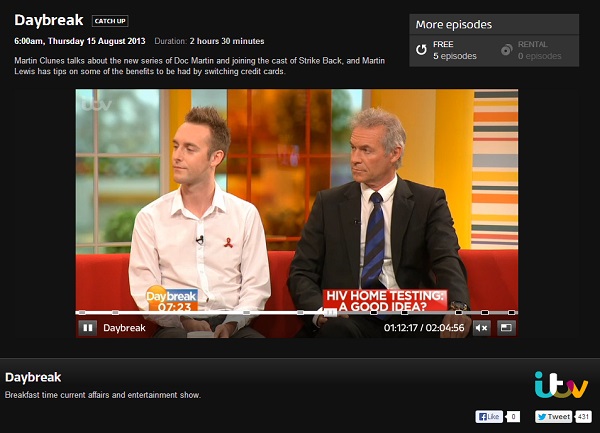
Well the last twenty-four hours have been interesting. Yesterday afternoon I got an email from a producer at ITV’s Daybreak breakfast show asking me to give them a call, it turned out they wanted me on the sofa the next morning to give my opinion on the HIV home testing kits that are due to be legalised come April 2014.
I ended up being booked onto a train only a couple of hours later, a car met me at Euston and took me to my hotel where a camera crew turned up to shoot promos, they left about midnight and I set my alarm for 05:00am. My alarm went off, I got up made myself presentable and a car took me to the studio. After several coffee’s I got plonked on the Daybreak sofa with Dr Hilary Jones and we were interviewed by Matt Barbet and Kate Garraway. I think it went pretty well – but you can check out the interview here: https://www.itv.com/itvplayer/daybreak/15-08-2013 (I’m on at 07:23am).
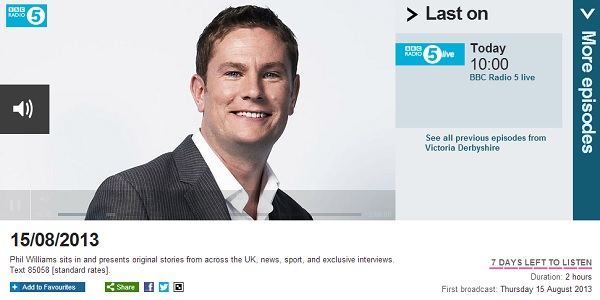
The car picked me up again and dropped me off at London Euston. Just as I was about to board my train I got a call from SavingLivesUK who wanted me to talk on their behalf on BBC Radio 5 Live’s morning show. So they sent another car for me, whisked me off to BBC Broadcasting House and I was interviewed alongside Sir Nick Partridge of the Terrence Higgins Trust by Phil Williams. It was a much more in-depth piece on HIV, focusing on stigma and the lifting of the ban on HIV+ healthcare professionals. You can catch the interview on BBC iPlayer here: http://www.bbc.co.uk/programmes/b0388b33
After that I headed back to Euston and got a train home to Birmingham. Now I’m sat in my office at my day job struggling to keep my eyes open. I’m going to sleep well tonight!
Let me know what you think of the interviews in the comments section below!
Love,
Tom
UKPositiveLad
Talking HIV, education and testing with @SavingLivesUK
Just a quick post here to let you know that a video I did with Saving Lives when I went to see them for a photoshoot a couple of weeks back is now live on YouTube.
I’m talking HIV, my diagnosis, testing and education in a short interview. Head over to see the video on their YouTube channel:
You can find out more about Savings Lives at http://www.savinglivesuk.com/ and follow them on Twitter as @SavingLivesUK
Lots of Love,
Tom
UKPositiveLad
Life with HIV & Hepatitis C – Adam’s story
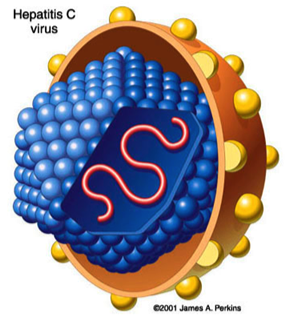 There’s no doubt that HIV is an under-discussed issue and attracts a fair amount of stigma – but the situation regarding stigma and education about Hep C is even worse. Now imagine living with both.
I met ‘Adam’ via Twitter, he’s a gay guy in his thirties who has recently been diagnosed with both HIV and Hepatitis C. I asked him if he’d let me interview him for UKPositiveLad.com and he very kindly agreed, on the basis that it was done anonymously – which is entirely understandable.
THE INTERVIEW:
ME: Thanks for talking with me Adam, let’s start at the beginning. You’re HIV+, when did you find that out?
ADAM: I was diagnosed in January. I went to 56 Dean Street, they have something called the Code Clinic on Tuesday nights that is for gay men who have risky sex or use recreational drugs — it’s meant to be very non-judgmental, and really is. I was diagnosed with HIV, and with Hep C co-infection
ME: You got both diagnoses at the same time? That must have been difficult?
ADAM: I got the HIV diagnosis that same night, but I had to wait until the next week to get the results from the blood test. I was expecting the HIV to be confirmed, to find out about viral load, CD4, etc but I was not expecting to hear about Hep C. It felt like winning a really shit lottery… all my numbers came up… and then there’s the thunderball!
ME: So what happened next? Were there more tests or did you go straight onto treatment?
ADAM: My CD4 count was just over 200, which is really low. I started on ATRIPLA for the HIV just a month after my diagnosis. They also put me on antibiotics, which were really scary – I’m allergic to the one they usually give out, so they had to give me one that is normally used for people with leprosy. It was really strong and gave me upset stomachs, so that freaked me out even more.
ME: So that was January, we’re now in June – how are the two strands of treatment going? Let’s start with the HIV.
ADAM: Well, the HIV treatment is much better now. I was on ATRIPLA for the first two and a half months but I did not like it. I had very vivid dreams every night… mine tended to be like really heightened sitcoms, but sometimes they were thrillers. But the reason they took me off ATRIPLA, is because my liver function was very elevated.At one point, it was more than 1000% of what it should normally be, in a non-Hep C infected person. So now I’m on Truvada and Raltegravir - three tablets a day total, but not tied to sleep – it’s wonderful! I have an undetectable VL and my CD4 was 370 last week.
ME: What about the Hep C?
ADAM: Before I got to meet with the consultant, I had to do a series of tests…
The first step was going for an ultrasound. (Yes, just like pregnant ladies). It was me, and a corridor full of all these sweet hetero couples, they were all loved up, and waiting for their first scan. I felt totally awkward, as I didn’t bring a lady with me and obviously I wasn’t there cos I was with child. The ultrasound was normal, but I found out I have two gall stones (again with the random unexpected health news!).
After the ultrasound, they sent me on for another test, called a Fibroscan. It’s kind of like sonar, they hold the device up against your tummy and it ‘pings’ your liver. Based on how quickly the pings come back, they can get a reading of how fibrous your liver is. If your liver is damaged (ie, scarred), then it is more fibrous, and it takes the pings longer to come back. Unfortunately, the Fibroscan results were inconclusive. There are 4 levels of Fibroscan ratings: 1 is that your liver is fine, 4 is that it’s damaged – I was in the 2-3 ‘indeterminate’ range. However, they think this could just be because the ATRIPLA was causing such heightened liver function, that my liver was swollen.
 ME: So what’s the next step?
ADAM: So the consultant says that I have two basic choices. I can start treatment straightaway or wait 3 to 5 years, and see if any new treatment options become available.
I’m going to wait to start treatment in about 4-6 months. I have a few big projects I have just started that will finish by then — I do a lot of creative work, and have finally just adjusted to being HIV+ and into a good routine with those meds… so I kind of want to get through a few big things, before dealing with the side effects.
ME: What is the treatment as it stands? What are the side effects?
ADAM: Right, the treatment lasts for 48 weeks. For the 12 weeks there’s one pill once a day, there’s one pill you take every day for the entire 48 weeks, plus a weekly injection for the the each week for 48 weeks. All on top of my three pill a day HIV treatment.
The side effects of Hep C treatment are very strong, they can include anemia, a rash, depression and mood swings. However, they will normally treat the side effects, rather than withdrawing the Hep C treatment, if this is possible - which tells you how seriously they take the need to treat the Hep C.
ME: How’ve you felt about sex since both of your diagnoses in January?
ADAM: Sex is complicated. For the first few weeks, I was not interested in it at all, I was really worried that I had just gone off it entirely, but I’d got myself in such a mess, it wasn’t really even a concern.
I usually barebacked before, but now that is especially fraught. I used to think “oh, if I do end up HIV+, then it’s OK to bareback with other poz guys” - but that is really not the case when you have Hep C.
Given how many profiles on websites like BBRT now mention the “my last Hep C test” I’m sure I am not the only one who’s been dealing with it, and of course, whoever I got it from either didn’t know their status, or they did and carried on regardless.
ME: Have you told many people your Hep status? If so how has it gone down?
ADAM: To be honest, no I haven’t. It was really down to you and a few other openly HIV+ tweeters that I got up the courage to get tested, and face it all. I have told one or two good mates, who I used to have sex with and they have been supportive.
ME: There seems to be a lot of stigma attached to Hep C, especially among HIV+ gay guys. Have you felt that?
ADAM: I think part of it is down to ignorance of what is actually involved in treating Hep C, and in part down to a double standard where guys who are HIV+ and bareback (and, in many cases, use drugs recreationally as part of the fun) will then get all worried about getting Hep C, but not enough to curtail any of the activities that would put them at risk.
You see it all the time on hook-up websites – guys have pictures of themselves getting barebacked and fisted, they put they are positive and use drugs, but put in a note about their last Hep C test date which is often six months ago or longer. You have to wonder how much risky sex they’ve had since then.
ME: Finally, how much did you know about Hep C before you were diagnosed – compared to now? Was it on your radar?
ADAM: I knew Hep C was out there, but to be honest, I didn’t think I would get it. I had been into fisting for a while, but had been very careful about who I’d let up there. I didn’t really know much about the treatment, but I did know that it was generally treatable. I had known of at least 2-3 guys who were HIV+ who got Hep C, had the treatment and cleared it so I guess I wasn’t really worried about Hep C.
So yes, it was on the radar, but I wasn’t especially worried, and I knew that if I ever did get it, it would be treatable. But I had never considered the possibility of HIV and Hep C co-infection, or finding out at the same time. And I didn’t realise quite what all was involved in adjusting to treatment, and to the reality of the diagnosis.
-
Thank you to Adam for sharing his story with us, if you’d like to know more information about Hepatitis C you can visit the Hepatitis C Trust’s website http://www.hepctrust.org.uk/ and follow them on Twitter at @HepatitisCTrust
Love,
Tom
UKPositiveLad
The big disclosure is getting closer!
Ahoy My Friday Lovers,
 The past couple of weeks have been pretty interesting really. Lots is changing in my life, and all of it good – for once!
Just over two weeks ago I told my parents and my siblings that I was HIV+. I sat them down in the living room on afternoon, turned off Bargain Hunt and explained to them that I was HIV+, how it’d happened, and that they shouldn’t worry because I was perfectly healthy and happy. They all took it surprisingly well, I’m not sure what I was expecting but it was so good to just get it off my chest.
Last week you may have seen me tweeting in a panic as a young friend of mine who’d recently been diagnosed HIV+ was threatening to take his own life due to bullying and harassment over his status. It took nearly half a day to track him down with the help of his friends and the police. For me it was a case of deja-vu, I’d been through this courtesy of an ex-boyfriend soon after I was diagnosed.
(read my blog-post The Night I Almost Died).
I couldn’t believe it was happening again, and to such a nice young lad. It made me so angry. In combination of frustration and dismay I took to Facebook and wrote a coming out piece telling my 100 or so selected friends, family and co-workers that I was HIV+. I was beyond tired of watching people’s statuses being used as a weapon or as idle gossip. The reaction I got was astounding. Everyone was universally supportive, my parents, siblings, friends, distant relatives I’ve not spoken to in years and even co-workers were telling me how brave I was, how proud they were and that they loved me. I’m not ashamed to admit I had a bit of a happy cry into my wine that night. It even inspired another HIV+ friend of mine to do exactly the same, in solidarity, on his Facebook wall – he too was overwhelmed with the support and love he was given.
Then this week I thought to myself, well I’ve tackled Facebook why not my personal Twitter? Twitter is a bit of a scarier beast. I have hundreds of people on my personal twitter as opposed to the 100 on Facebook, and things travel a lot wider a lot faster – one of its core strengths in my opinion. The 140 character limit is also somewhat of a limitation. So what I did was write my message, split it up into several 140 character chunks, and then copy and paste them into twitter in order. Rapid fire tweeting if you will.
Once again the reaction was overwhelmingly positive. This time I had a few negative comments but they weren’t from people I really knew – so I can’t say I cared all that much. My friends (both online and in real life) have been incredibly supportive, some through offering hugs and coffee – others through just being my friends as normal. I’m at a stage where I’m largely comfortable with my HIV, I don’t need as much support as I once did, but it’s nice to know that it’s there should I need it.
The next stage is my coming out (as it were, I don’t know if there’s a better term?) on here and my UKPositiveLad Twitter/Facebook accounts. This will be timed to happen at the same time as the April issue of Attitude is released on March 6th. I’m not going to lie, I’m nervous as hell – it’s playing on my mind something chronic. But if the way people have reacted over the last couple of weeks is anything to go by then hopefully I won’t have too much to worry about.
Have a fab weekend,
Sam
UKPositiveLad
Dating with Depression and HIV
Hmm.
I’ve made no secret of the fact I suffer from depression. In fact I’ve been diagnosed with ‘Severe Clinical Depression’ on 3 separate occasions now, for which I was medicated. This tends to happen sporadically, in between I’m mostly sound as a pound – but now and then I get little dips.
The last week or so has been one of these dips. To start with I tried to chalk it up as January Blues but after a few days I realised it was more than that.
I can identify the signs right from the beginning:
- Lack of energy
- Inability to get out of bed in the morning
- No desire to go and do things
- Becoming withdrawn and quiet
- Feeling lonely
A few years ago I’d knuckle down, get stuck into some big project at work and then come home and cuddle up with the husband to worm my way out of the depression. I don’t really have that option any more. My job is neither interesting nor involved enough to bury myself in, and my luck in love has been beyond awful for the last few years.
I actually started writing this article 30 minutes ago, with the idea of writing how I’ve been working hard not to show my depression to the guy I’ve been dating, as he’s been so sweet and understanding with regards to the whole HIV issue. But only 10 minutes ago I got a text message saying he was breaking up with me because he couldn’t handle the strain on him of dating someone who was HIV+. So I’m kind of lost now.
I just want someone to cuddle up with on the cold nights, chat to about my worries and how I’m feeling. It’s not easy being HIV+, it’s doubly not easy being HIV+ and suffering from depression. I can’t see this cloud clearing in the next week now. Sigh.
Sorry for the miserable blog but sometimes I just need to vent, and seeing as it’s just me here you lot get the raw end of the deal.
An appropriate clip from Sex & The City…
Sam
UKPositiveLad
Attitude Magazine January Edition – OUT NOW
 Hello Hello,
The January issue of Attitude Magazine is out today in iPad format, and hits shops next Wednesday (12th December). Yes I know it’s not even half way through December yet, but that’s how things work in the publishing world apparently!
Click here to visit the iTunes Store and get your copy!
In my column this month I go off on a bit of a rant about my privacy or lack there of when it comes to my HIV status. People, it seems, have been gossiping left right and centre and I’m less than pleased – to put it mildly. Seriously, people wonder why there’s stigma still attached to HIV…
Also in this issue you can enjoy an interview with the stunningly handsome Olympian that is Jonnie Peacock, a special on the hottest men in theatre, Rhianna’s 777 Tour and exclusive behind the scenes info from ‘The Hobbit’. Essential reading to stop you going stir-crazy over the holidays…
Have a fun Friday!
Sam
UKPositiveLad
I talk HIV on BBC Radio 5 Live.
Hello all,
Welcome to Monday morning! I hope you’re enjoy a cup of coffee, I’m on my third at this point.
What a crazy weekend that was, with gallery openings, World AIDS Day events, street collecting for the Terrence Higgins Trust in the freezing cold, speaking engagements and being interviewed on live radio to top it all off.
I got a call on Saturday afternoon from the producers of the ‘Double Take’ show on BBC Radio 5 Live, asking if I’d be willing to come on air for a few minutes to talk about my experience with HIV, and where I think we’re failing in light of the recent figures realised showing that in 2011 more gay men were diagnosed HIV+ than ever before.
I was in Milton Keynes on Saturday night/Sunday morning and had no way to get to a BBC studio, so had to conduct the interview from a spare room at my friend’s house over Skype. It was pretty brief but I think got part of my message across. HIV is manageable, but not curable and we can’t continue to be complacent. We need a widespread and mainstream ad-campaign that reaches everyone in the UK regardless of gender, sexual orientation, ethnicity, wealth or age.
You can listen to the interview on BBC iPlayer for a week here: http://www.bbc.co.uk/programmes/b01p3mwy
My interview starts from time: 23 minutes and 45 seconds in.

Have a great week everyone!
Sam
UKPositiveLad
World AIDS Day 2012
Hello Hello,
Today, Saturday 1st December 2012, is the 24th World Aids Day.
We’ve come a long way in thirty-four years. Back then a HIV diagnosis was more often than not followed with an AIDS diagnosis and a high likelihood of death. Now in 2012 HIV is a manageable condition, with early diagnosis and modern treatment regimens we can expect to live as long as any of our HIV- contemporaries, some say even longer with the constant health monitoring and care we receive.
But HIV still has no cure, it’s a life long condition – one that is not easy to live with, either physically or emotionally. The HIV related complications are numerous, the risk of certain cancers is dramatically higher and that’s not even mentioning the stigma and discrimination HIV+ people can still face today.
Whilst things may have improved dramatically for people living with HIV in the developed world the same thing can’t be said for others around the world. Deaths from HIV/AIDS in Africa are still unconscionably high. We need to work on providing support, education, cheaper medication and contraception. If we’re going to fight this epidemic we need to hit it – HARD.
Closer to home, I hear a lot of people asking “What does World AIDS Day have to do with me?”, and until I was diagnosed I’m ashamed to admit that I was one of those people. We’re bombarded with so many “international days” it’s hard to keep track of what’s happening when and whether it’s worth getting involved. In November alone there are TWENTY-FOUR “international days” including:
- World Planning Day
- World Kindness Day
- World Pneumonia Day
- World Hello Day
- World Fisheries Day
But World AIDS Day is one of the biggies. It happens in most countries around the world with the backing of the United Nations and the World Health Organisation. It’s a time to reflect on those we’ve lost to the disease internationally over the few decades, time to think about how we can help work towards a HIV free generation, and time to think about our own behavior.
Leading up to this year’s World AIDS Day there was the first UK wide ‘HIV Testing Week’ – an initiative to get people up and down the country regardless of gender, age, sexuality or ethnicity to go and get tested. Something I wrote about the other day ‘Read more…’
But don’t let the good work stop there, if you didn’t get chance to go get tested this week – go next week! Once you’ve done it put an appointment in your diary to go again in six months, the short time it takes to get tested is a small price to pay for peace of mind and being in control of your own health, and the health of those you sleep with.
I’m going to be spending today wandering around Central London with the Terrence Higgins Trust rattling buckets and collecting money to help continue the fight against HIV. If you see us please fling some change our way, and if you don’t perhaps you could go online and donate something?
Whatever you do this World AIDS Day do it with kindness, love and thought.
Love,
Sam
UKPositiveLad
Footnote: You can read World AIDS Day interviews with me in today’s The Times and at SoSoGay, as well as my 2,000 world feature on World AIDS Day in this month’s issue of Attitude Magazine!
Your HIV questions answered by DrEd.
Currently 100,000 people are estimated to be living with HIV in the UK, but an estimated 25% of those are undiagnosed.
That’s 25,000 people who have HIV and don’t know about it! As we come to the end of HIV Testing Week in the UK and approach World AIDS Day 2012 I put some of your questions about getting tested and HIV to Dr Sebastian Winckler from DrEd.
1. Why is it so important to get tested for HIV?
Early testing is vital both for you, and for the people you’re sleeping with.
If you’ve got HIV and you’re getting treatment you can expect to live 40 years longer than someone who isn’t receiving treatment.
If you’re taking antiretroviral medication, you become less infectious to other people. Being aware of your status means you can start putting certain measure in place (such as safe sex)
to prevent transmission, as well as looking after your own health.
2. What stops some people from getting tested?
There are a lots of reasons why people avoid HIV tests, but usually it’s down to:
- The stigma surrounding HIV and AIDs: Despite advancements in treatment, in some communities there is still stigma about being HIV+, so many people feel embarrassed about getting tested. Remember, there is no shame in being HIV+.
- The inconvenience of testing: If you work during the day, it can be hard work finding the time to go.
- Fear: Some people are simply scared off getting a result they don’t want to hear. Remember though, it’s better to get tested and treated rather than making yourself, or others, ill.
3. Where can I get tested?
HIV tests are available free and confidentially from:
- Sexual health (GUM) clinics
- HIV testing centres (Terrence Higgins Trust Fastest centres, for example)
- LGBT Centres
- GP’s and family doctors
- HIV tests are available to buy from:
- Private clinics
- Online doctors services
4. I haven’t had any symptoms, so I probably don’t have HIV, right?
Wrong. Most people will experience a short, flu-like illness about 2- 6 weeks after being infected. This is your immune system putting up an initial fight against the virus and can last for up to a month. But, this can be easily mistaken for the flu and 20% of people don’t experience any symptoms at all.
After this has gone away, you are unlikely to notice any other symptoms for a long period of time. So the only way of knowing for sure is getting yourself tested.
5. Can a test pick up any HIV infection, regardless of when I’ve caught it?
No. A certain amount of genetic material needs to build up in your system before it can be accurately detected by a test. The time taken for this to happen is called the ‘window period’ and this is different for every test.
- The standard antibody (Ab) test will pick up HIV if you caught it more than 3 months ago.
- The combined antibody/ antigen test (4th Generation test) will pick up HIV if you caught it more than 6 weeks ago.
- The HIV PCR test will pick up HIV if you caught it more than 7-10 days ago.
In most cases, you will be given either the standard antibody or combined test. If you test negative for these, it doesn’t necessarily mean that you are HIV negative, because you might have been infected within the last 3 months (or 6 weeks). You are therefore advised to take a second test 3 months later for the all clear.
If you want a faster result you can pay for a PCR test. But these are only offered at some clinics and may cost up to £250.
6. I think I’ve caught HIV within the last few days, what do I do?
If you’re worried that you’ve contracted HIV very recently, as in, within the past 72 hours (3 days) then you should go to your local GUM clinic or A&E department and request emergency PEP treatment.
7. I’m afraid to get tested because I don’t like needles
HIV tests don’t have to be done via needle or syringe, some clinics use ‘Fastest’ Rapid Testing which simply takes a prick on the end of your finger. Other clinics may take oral swabs instead, this method is considered less effective than a blood test however, so some clinics won’t offer it.
8. How long do I have to wait for my results?
That depends on the clinic you go to. Most will contact you with your result (or ask you to come back in for it) within 3-5 days. If you take a rapid test your result will be ready within the hour. Some clinics can take up to 2 weeks however, don’t be afraid to ask when you should expect the results.
9. What happens if I test positive?
First off, a positive result doesn’t always mean you’re HIV+. There is a small margin of error, so all positive results must be followed up by a confirmation test.
If you do test positive for that, then the doctor or nurse who informs you of your result will set up a meeting with a specialist who can assess the stage of your infection and talk to you about relevant treatment options. You’ll be put in touch with local HIV support groups who can help you cope emotionally, and make you realise that a positive result is not the end.
Thirty years on and HIV is still a problem in the UK, but it is no longer a death sentence. There is help out there and the earlier you get tested, the better your prospects. Whatever you do, make sure you get tested this HIV Testing Week.
Some charities that can help:

National HIV Testing Week
Happy Friday to you lovely people,
Today, Friday 23rd November 2012 marks the start of National HIV Testing Week here in England. This is the first time such a large initiative has been run to encourage the people of England to go out and get tested.
National HIV Testing Week runs from Friday 23rd November to Friday 30th November, finishing just before World AIDS Day on Saturday 1st December.
The initiative is being run by the Terrence Higgins Trust, the UK’s largest HIV charity (who are celebrating their 30th birthday this year) and supported by a whole host of other organisations such as BASHH, BHIVA and the HPA.
Many people are put off going for HIV test by a fear of needles or having blood taken, but the fact is most clinics these days use rapid testing known as FastTest which involves a simple prick on your finger and you’ll get the results within minutes.
 Annie Lennox was interviewed this week for ITV News about her views on HIV and testing in the UK, she said:
“We’re still struggling with the issue of stigma, fear and ignorance, There are many people that now, actually need to get tested. Friday 23rd at the end of the is the begining of National Testing week here in the country and we’ll be encouraging people to go get tested and find out their status… Go and get tested, find out your status, then you can know what you’re dealing with.” You can watch the full interview here: http://vimeo.com/53871991

Boris Johnson, The Mayor of London said:
“London is home to almost half of all people living with HIV in the UK, but a quarter of them are unaware that they carry the virus. It is vital that people who might be at risk get tested, not only to reduce the risk of transmission to others, but to ensure that they get the life-saving treatments that are available”
You can find out what’s happening for National HIV Testing Week in your area, and where you can go to get tested by visiting the THT Clinic Finder page, or the National HIV Test Week facebook page.
Even if you’ve been tested recently, or are HIV+ why not help promote National HIV Testing week via your facebook or Twitter using #HIVTestingWeek and encourage your friends to go and get tested. The sooner you know, the sooner you can take control of your health and protect those around you.
Enjoy your Friday and weekend!
Lots of Love,
Sam
UKPositiveLad
